
Variant scenario using reduced unit sizes, increasing tactical granularity and stretching the system to its operational limits.
This version uses smaller unit sizes than standard Napoleon’s Battles scenarios, significantly increasing the number of units on the battlefield and altering command, fatigue and morale dynamics.
After the French advance on 15 June 1815, Quatre Bras became a key crossroads linking Allied forces. Napoleon aimed to pin Blücher while Ney seized the junction.
The battle evolved throughout the afternoon as reinforcements arrived on both sides, making control of the crossroads decisive for the campaign.
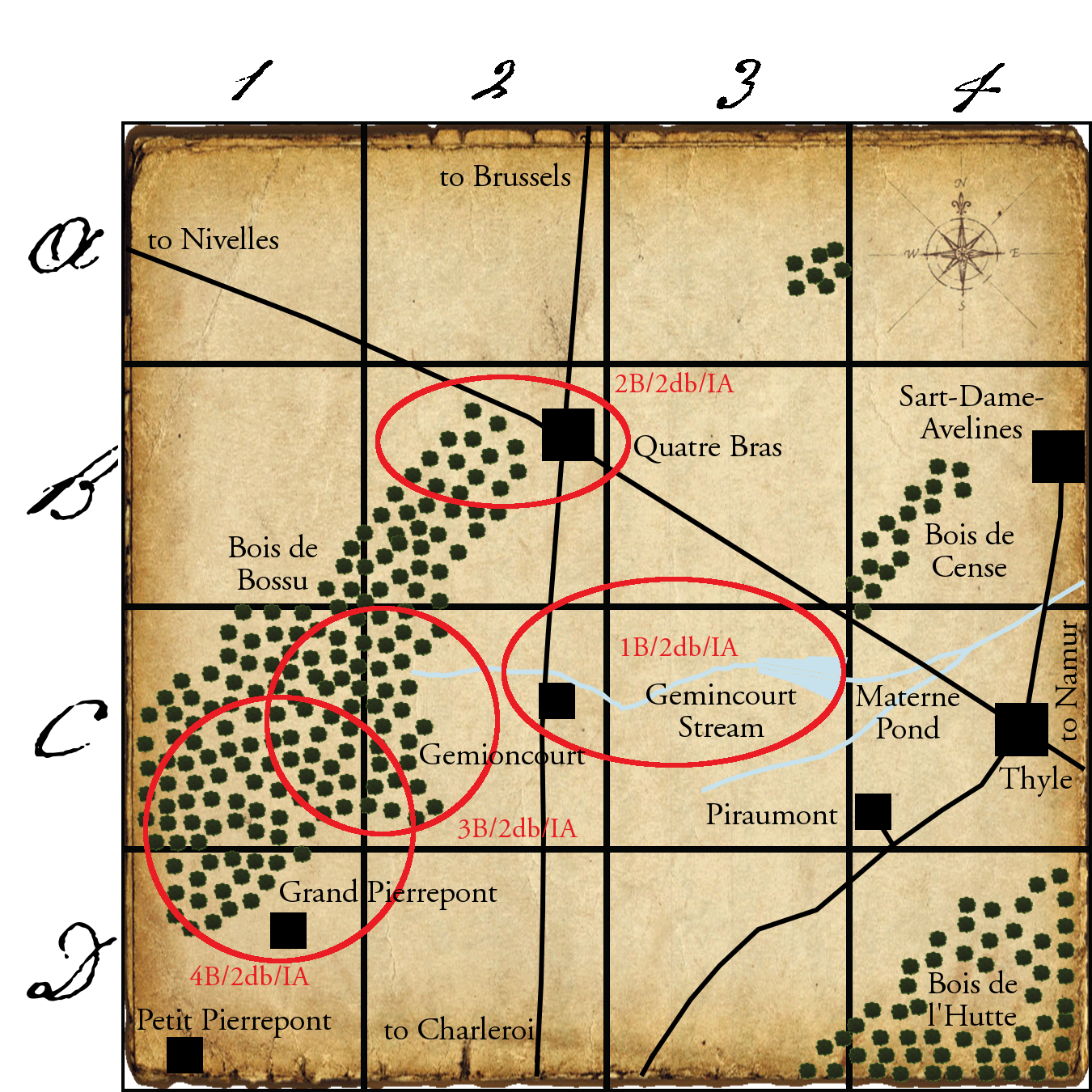
+2: Quatre Bras, Thyle, Sart-Dame-Avelines.
+1: Petit Pierrepont, Grand Pierrepont, Gemincourt, Piraumont.
The pond may not be entered.
Allied forces deploy first.
Small BUA (1.5”): max 2 infantry + 1 artillery.
Units crossing Gemincourt Stream become disordered.
Bois de Bossu is open wood.
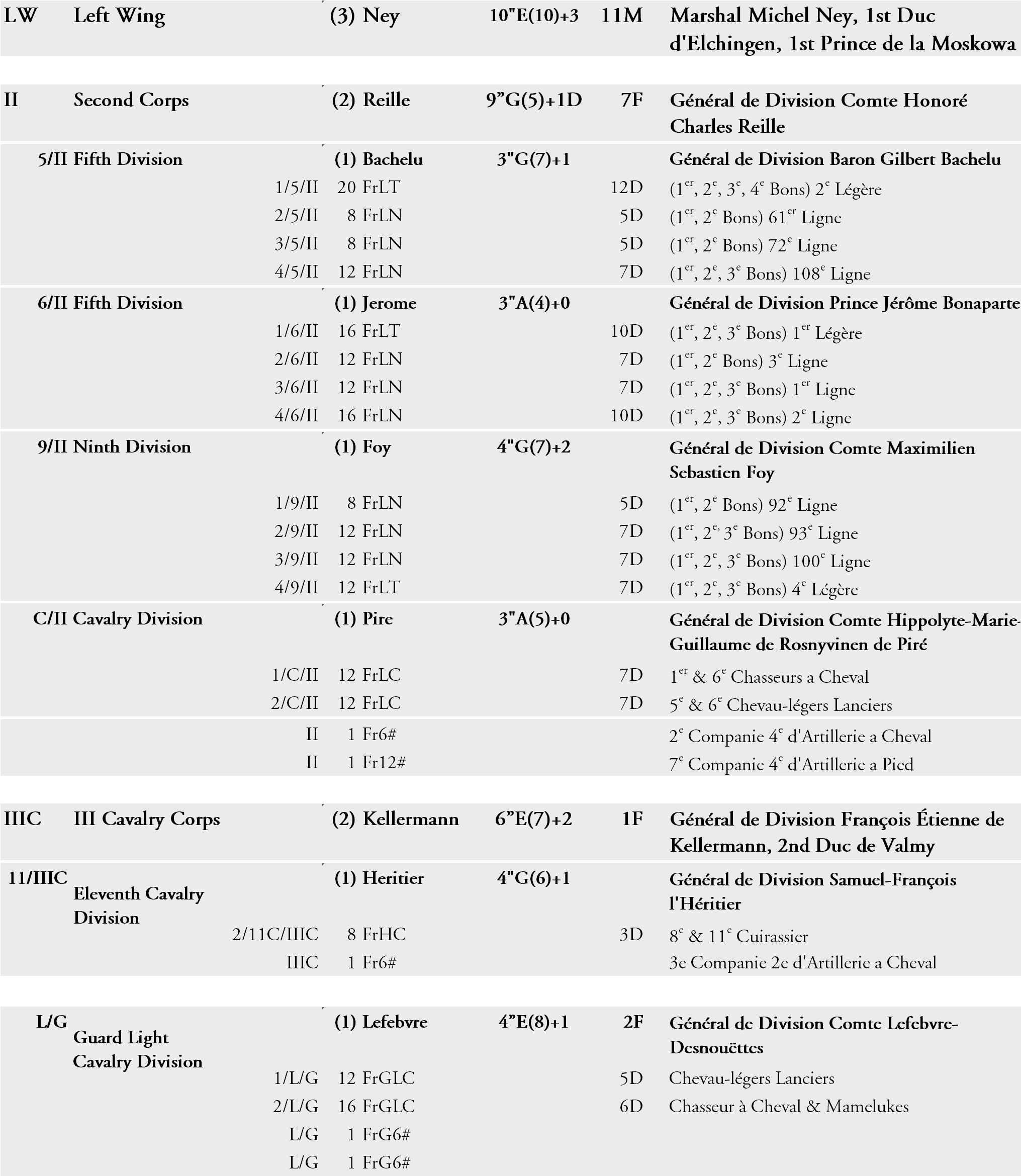
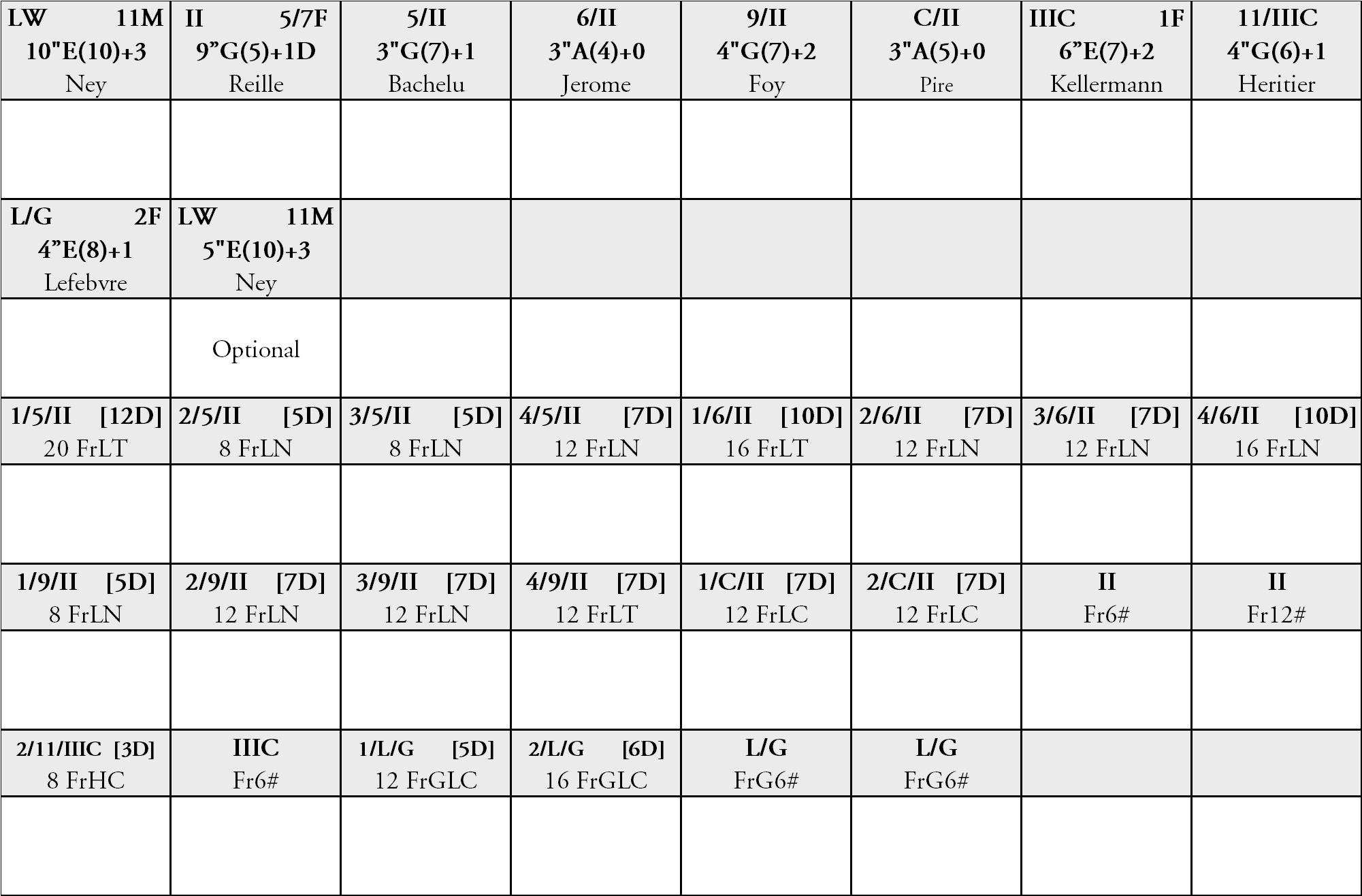
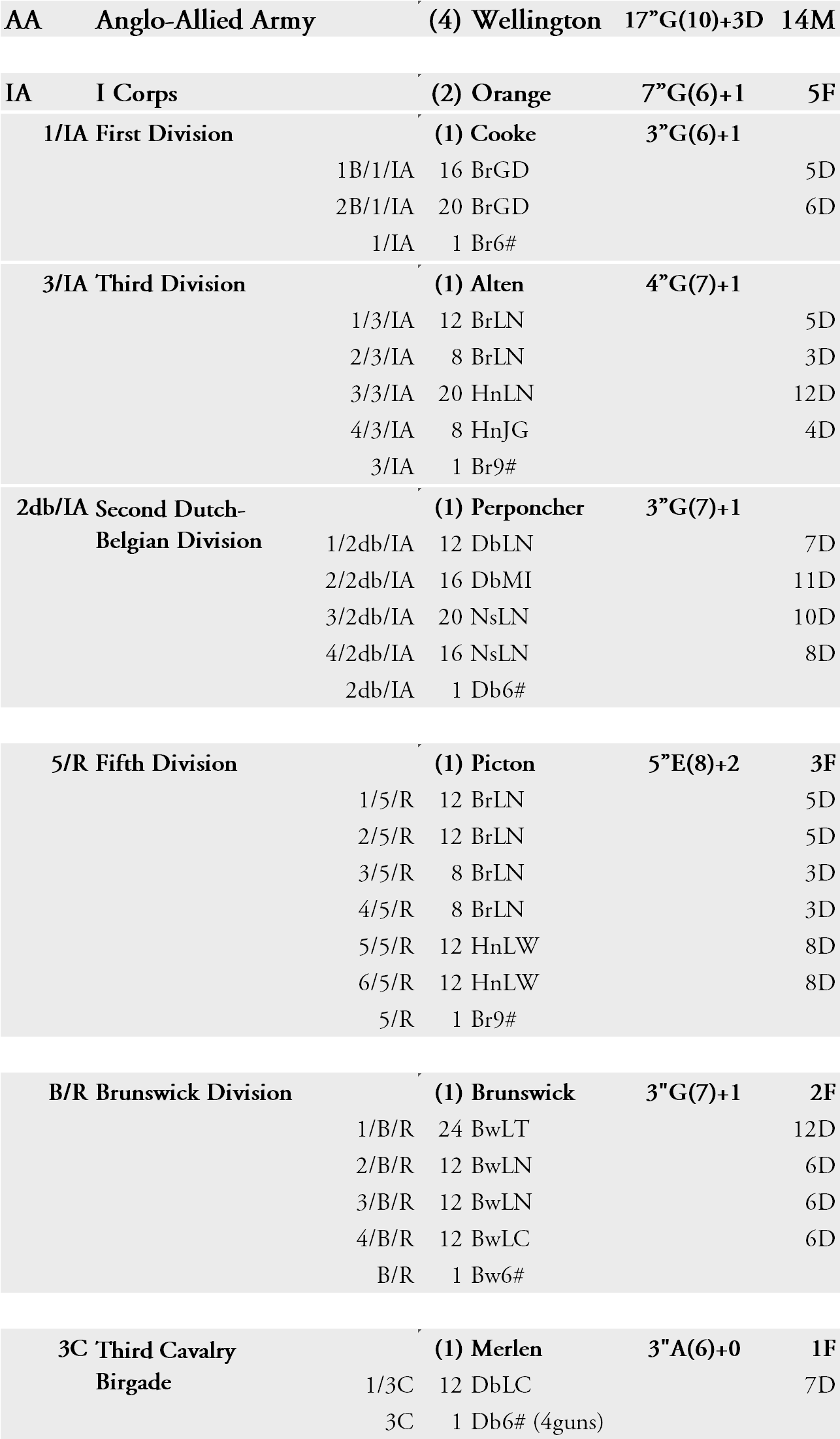
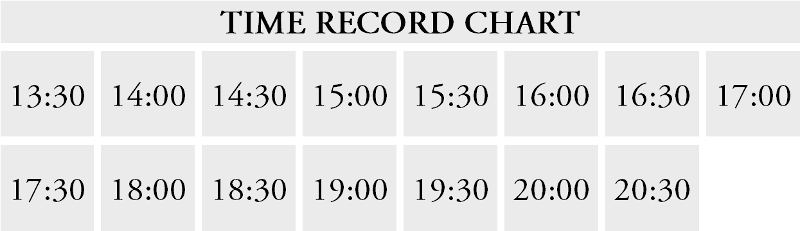
13:30 – 20:30
French move first and start with initiative.
13:30 – Ney, Reille, 5/II, 9/II, C/II deployed.
14:00 – 6/II arrives.
14:30 – IIIC arrives.
14:00 – 3C arrives.
14:30 – 5/R arrives.
15:00 – Wellington and Brunswick arrive.
16:00 – 3/IA arrives.
18:00 – 1/IA arrives.
18:30 – Brunswick artillery arrives.
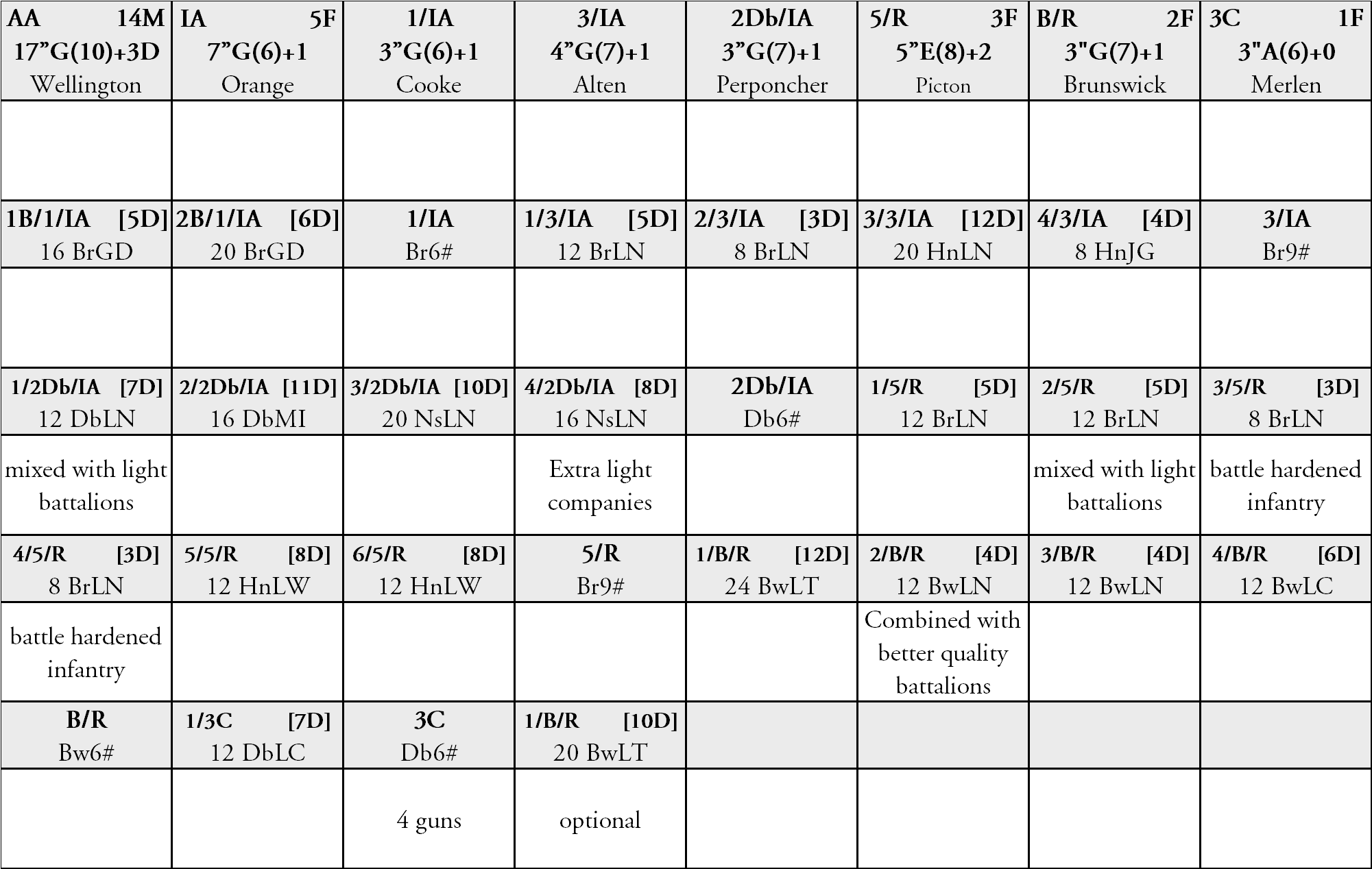
Army morale increases as reinforcements arrive throughout the battle.
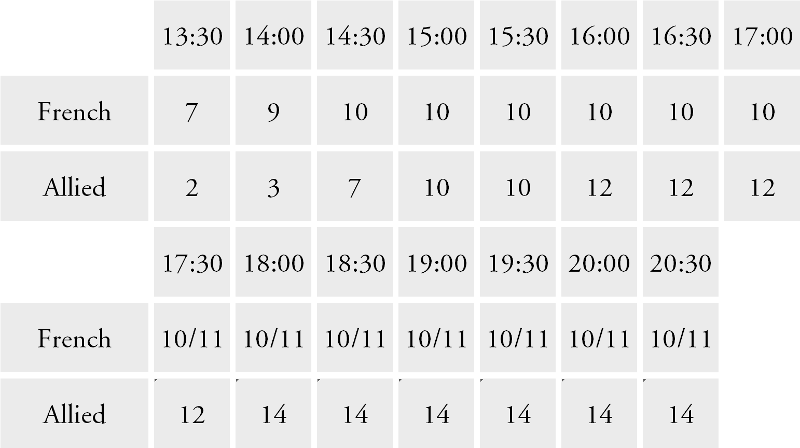
II Corps starts at 5F (instead of 7F) until 14:00.
IA fatigue increases from 2F → 4F → 5F during the day.
French: 6 | Allied: 5
Includes mixed battalions, extra light companies and battle-hardened units.
Command span reduced to 5". French gain +5 VP.
Guard Light Cavalry may enter after 17:00 with increased VP penalties.
Acts as army commander (10 response) until Wellington arrives.
The battle of Quatre Bras developed as both sides rushed reinforcements to control a critical crossroads linking the Anglo-Allied and Prussian armies.
Despite early French advantages, Allied reinforcements stabilized the situation, preventing Napoleon from fully exploiting his victory at Ligny.
Download full Small Units scenario:
Download PDF